Encyclopédie des consoles
Sony · 2004
PSP
Émulateur PSP en ligne
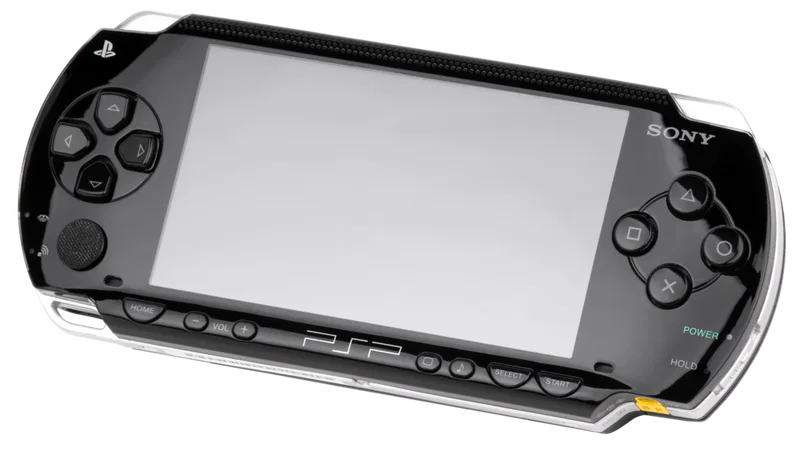
Sony’s widescreen handheld combined 3D games, media playback and wireless connectivity in a portable system.[1]
- Premier lancement
- 2004
- Fabricant
- Sony
- Catégorie
- Console portable
- Génération
- 7
- Supports
- UMD; digital software on Memory Stick
Le récit historique est présenté dans sa version anglaise de référence.
Histoire de la console
PSP launched in Japan in December 2004. Its UMD optical drive distinguished it from cartridge-based handhelds, while Memory Stick storage supported media and digital software.[1]
Later PSP models revised the display and memory. PSP Go replaced the UMD drive with a sliding design and internal storage, changing how software was obtained.[1]
Les grandes étapes
Profil technique
- Processeur
- MIPS-based Allegrex · up to 333 MHz[2]
- Mémoire
- 32 MB main RAM (PSP-1000)[2]
- Affichage et graphismes
- 480 × 272 · widescreen LCD[2]
- Supports
- UMD; digital software on Memory Stick[2]
- Audio
- Stereo audio[2]
- Alimentation
- Rechargeable battery[1]
- Commandes et connectivité
- Buttons and analog nub; Wi-Fi on original PSP[2]
Importance historique
Jeux emblématiques
Les années indiquent la première sortie de la version citée. GameCapsule ne distribue pas ces jeux.
Variantes du matériel
Accessoires et écosystème
Famille de systèmes
Systèmes associés dans la collection. Ces liens n’impliquent aucune compatibilité technique.
Galerie du matériel
PSP
Sony-PSP-1000-Body.png — Evan-Amos, Wikimedia Commons; public domain. Downloaded at 960px width. Public domain (PD-self)

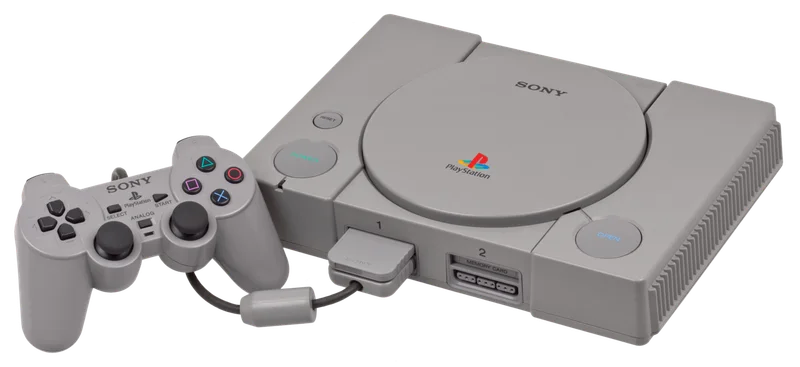
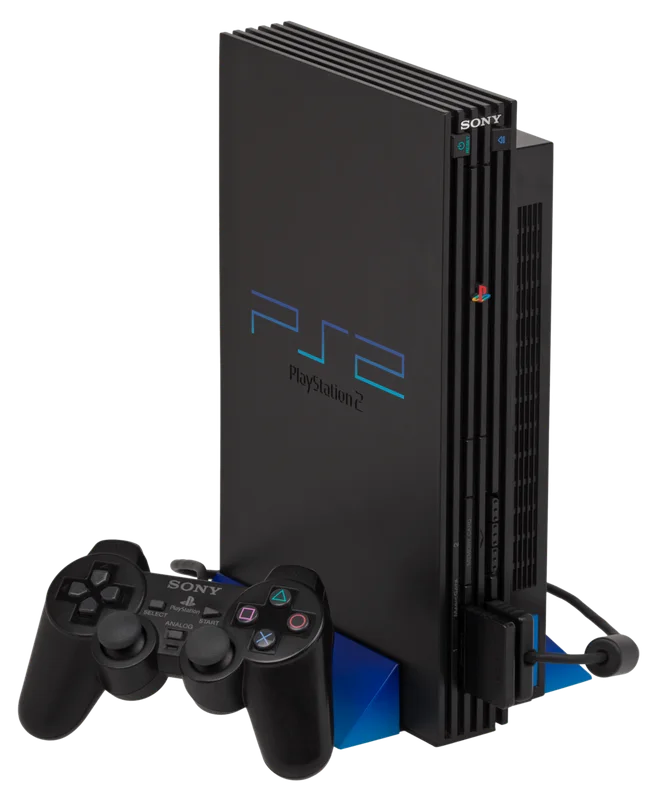
Illustration de console de la collection Game Capsule. Aucune capture de jeu n’est présentée.
Prise en charge GameCapsule
Ce système figure au catalogue. Son émulateur, l’importation de fichiers et le jeu ne sont pas disponibles aujourd’hui. Aucune date de sortie n’est annoncée.
Développez-vous au-delà de Game Boy tout en préservant une collection cohérente. Les autres consoles restent uniquement au catalogue.
Importez vos propres fichiers de jeu compatibles. Game Capsule ne fournit pas de jeux commerciaux.
Explorer la feuille de routeSources et lectures
- Historical overview and model chronology ↗
Historical narrative, regional release precision, model chronology, commercial context and accessories
Reviewed 2026-09-30 - Rodrigo Copetti · hardware architecture research ↗
Processor, memory, graphics, audio and hardware interfaces
Reviewed 2026-09-30 - Lumines · release history ↗
Named game/version release year; descriptive context
Reviewed 2026-09-30 - Monster Hunter Freedom Unite · release history ↗
Named game/version release year; descriptive context
Reviewed 2026-09-30 - Patapon · release history ↗
Named game/version release year; descriptive context
Reviewed 2026-09-30 - Sony · official PlayStation history ↗
Launch context, hardware revisions and reported sales
Reviewed 2026-09-30