Console encyclopedia
Nintendo · 1983
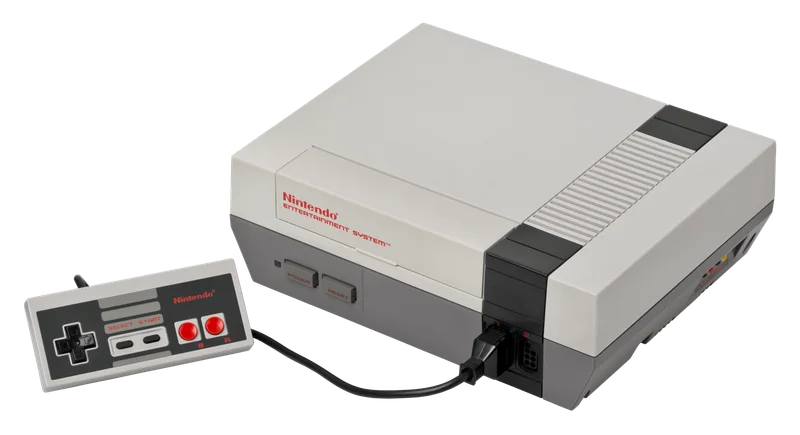
Nintendo Entertainment System / Famicom
NES Emulator Online
Nintendo’s Famicom became the Nintendo Entertainment System overseas, pairing cartridge software with dedicated tile-and-sprite graphics.[1]
- First launch
- 1983
- Manufacturer
- Nintendo
- Category
- Home console
- Generation
- 3
- Hardware sales
- 61.91M[6]
Worldwide Famicom / NES hardware.[6]
The console story
The Famicom launched in Japan in 1983. Nintendo redesigned its appearance and packaging for the NES launch in North America, beginning with a limited test market in 1985.[1]
International releases were staggered rather than one worldwide event. The Japanese Disk System offered rewritable disk software, while overseas NES accessories included the Zapper and R.O.B.[1]
A history in milestones
Technical profile
- Processor
- Ricoh 2A03 / 2A07 · 6502-derived[2]
- Memory
- 2 KB work RAM + 2 KB video RAM[2]
- Display & graphics
- PPU · regional NTSC / PAL output[2]
- Media
- ROM cartridges[2]
- Audio
- Five channels (base hardware)[2]
- Power
- External AC adapter[1]
- Input & connectivity
- Two controllers; Famicom and NES connector designs differ[2]
Why it mattered
A durable software vocabulary
Its library helped establish Mario, Zelda and Metroid as recurring series. Cartridge hardware could extend the base machine’s capabilities.[1]
Worldwide Famicom / NES hardware.[6]
Defining games
Years refer to the earliest release of the named version. Games are historical references; GameCapsule does not distribute them.
Hardware variants
Accessories & ecosystem
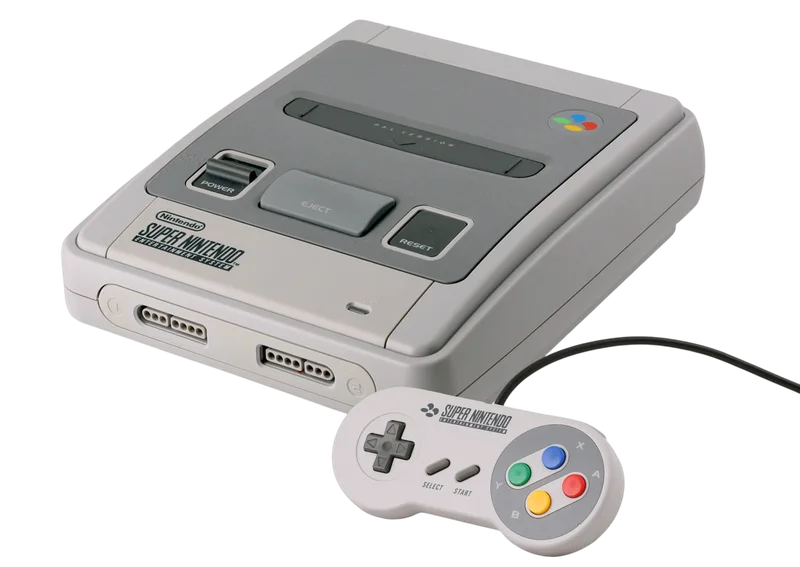
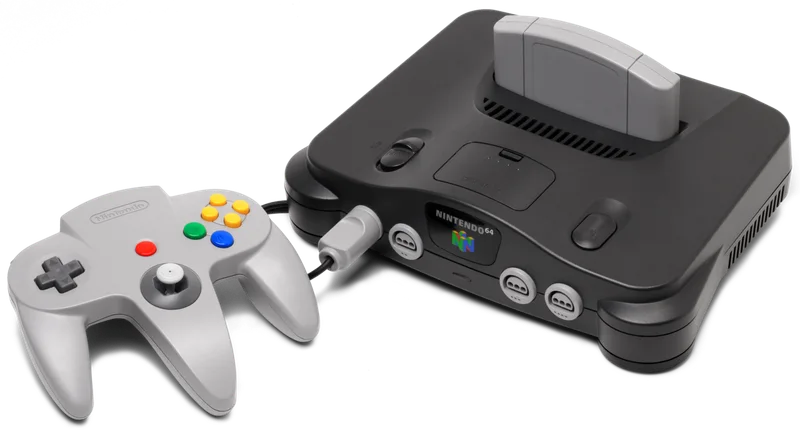
System family
Related systems in the collection. These links do not imply technical compatibility.
Hardware gallery
Nintendo Entertainment System / Famicom
Evan-Amos, public domain, via Wikimedia Commons. Public domain (PD-self)

Console artwork from the Game Capsule collection. No gameplay screenshot is shown.
GameCapsule support
This system is represented in the catalog. Its emulator, file import and gameplay are not available today. There is no announced release date.
Expand beyond Game Boy while preserving a coherent collection. Other consoles remain catalog-only.
Bring your own compatible game files. Game Capsule does not include commercial games.
Explore the roadmapSources & further reading
- Historical overview and model chronology ↗
Historical narrative, regional release precision, model chronology, commercial context and accessories
Reviewed 2026-09-30 - Rodrigo Copetti · hardware architecture research ↗
Processor, memory, graphics, audio and hardware interfaces
Reviewed 2026-09-30 - Super Mario Bros. · release history ↗
Named game/version release year; descriptive context
Reviewed 2026-09-30 - The Legend of Zelda · release history ↗
Named game/version release year; descriptive context
Reviewed 2026-09-30 - Metroid · release history ↗
Named game/version release year; descriptive context
Reviewed 2026-09-30 - Nintendo investor relations · lifetime hardware sales ↗
Worldwide consolidated lifetime hardware units; report as of June 30, 2026
Reviewed 2026-09-30